Flat floors
The sentence that banned ground effect in Formula One was about a shape, not a force — and it worked.
01The floor becomes the rulebook
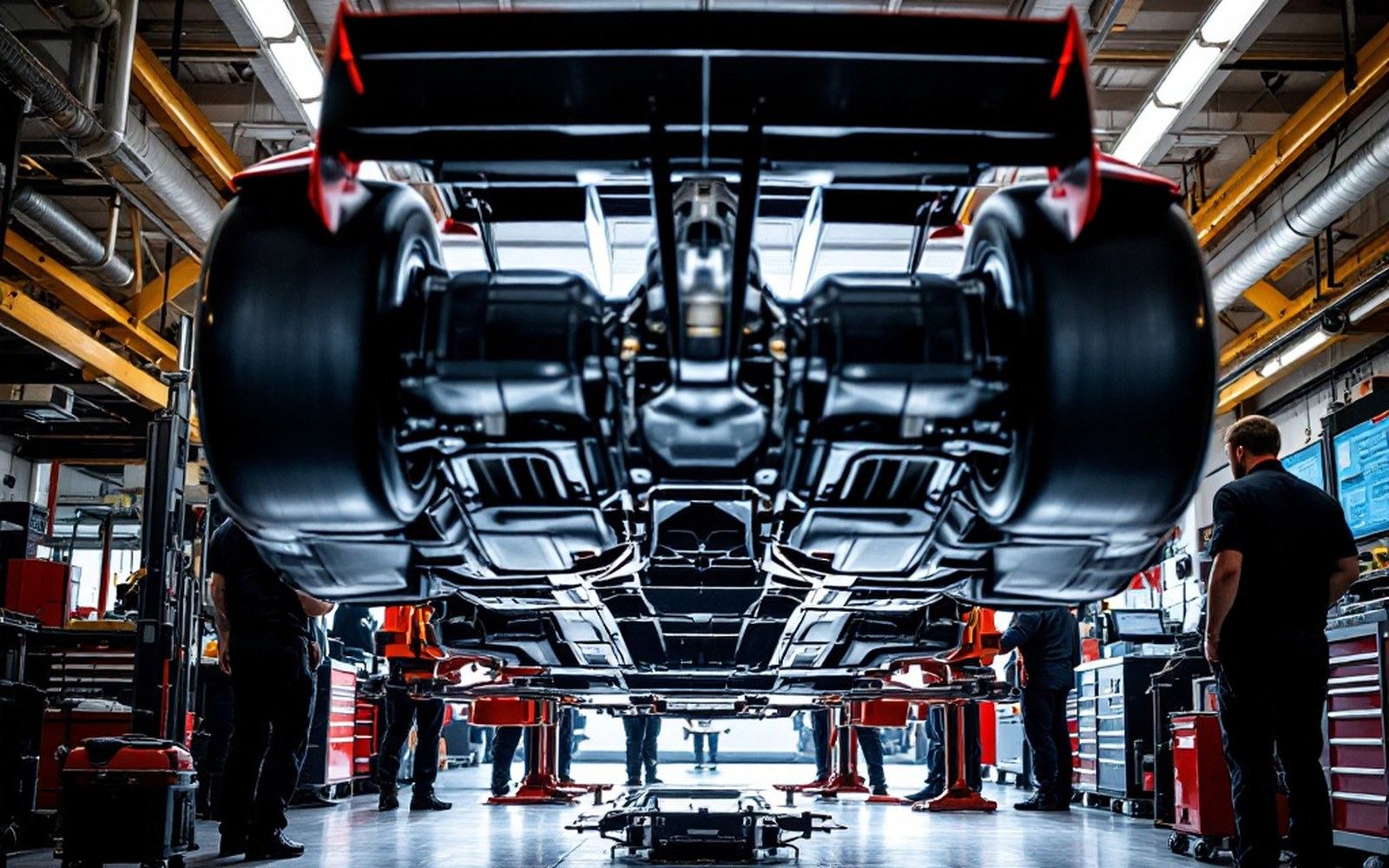
For 1983, the FIA wrote a requirement into the technical regulations that the underside of a Formula One car, from the front axle line to the rear axle line, must form a flat, horizontal plane. That single geometric constraint ended ground effect as Chapman and his contemporaries had practised it: the shaped venturi tunnels, the low-pressure field that had generated downforce without a gram of added drag, were now simply illegal because the floor that housed them had a mandated shape.
The context matters. The sliding skirts that sealed those tunnels to the road had already been banned for 1981, but teams found ways to run cars stiff enough that the floor still worked intermittently, and the regulations had proved difficult to enforce. The flat-floor rule was blunter and more enforceable: a scrutineering template pressed against the underside either clears or it does not.
Chronology
- 1981sliding skirts banned; enforcement proves difficult
- 1983flat floor between axle lines mandated; shaped venturi tunnels eliminated
- 1983 onwarddiffuser becomes primary aerodynamic development zone
What the rule abolished at the front it redirected at the rear. The flat-floor requirement ran only between the axle lines, leaving the section behind the rear axle — the diffuser — entirely open to development. Within a season, diffuser geometry had become the primary aerodynamic battleground in Formula One, a position it held for nearly three decades. Teams worked the diffuser's exit angle, its width, its internal channels, and eventually the strakes and turning vanes that conditioned the airflow feeding it. The FIA's technical regulations governing the flat floor are traceable directly through successive Appendix J iterations; the fundamental constraint on the underwing zone has remained in place, in various forms, ever since.
What the rule abolished at the front it redirected at the rear.
The flat floor also closed the performance gap between well-resourced and smaller teams that had struggled to master aerodynamic sealing. As Williams, Brabham and Ferrari's engineers turned to the diffuser, the argument moved from a zone that was effectively banned to one that was explicitly permitted — which is how a restriction becomes, in practice, an invitation to the next problem.