Fuel allowances
The number in the rule told engineers how far they could push a turbo engine; every other decision followed from it.
01The 220-litre baseline and the squeeze that followed
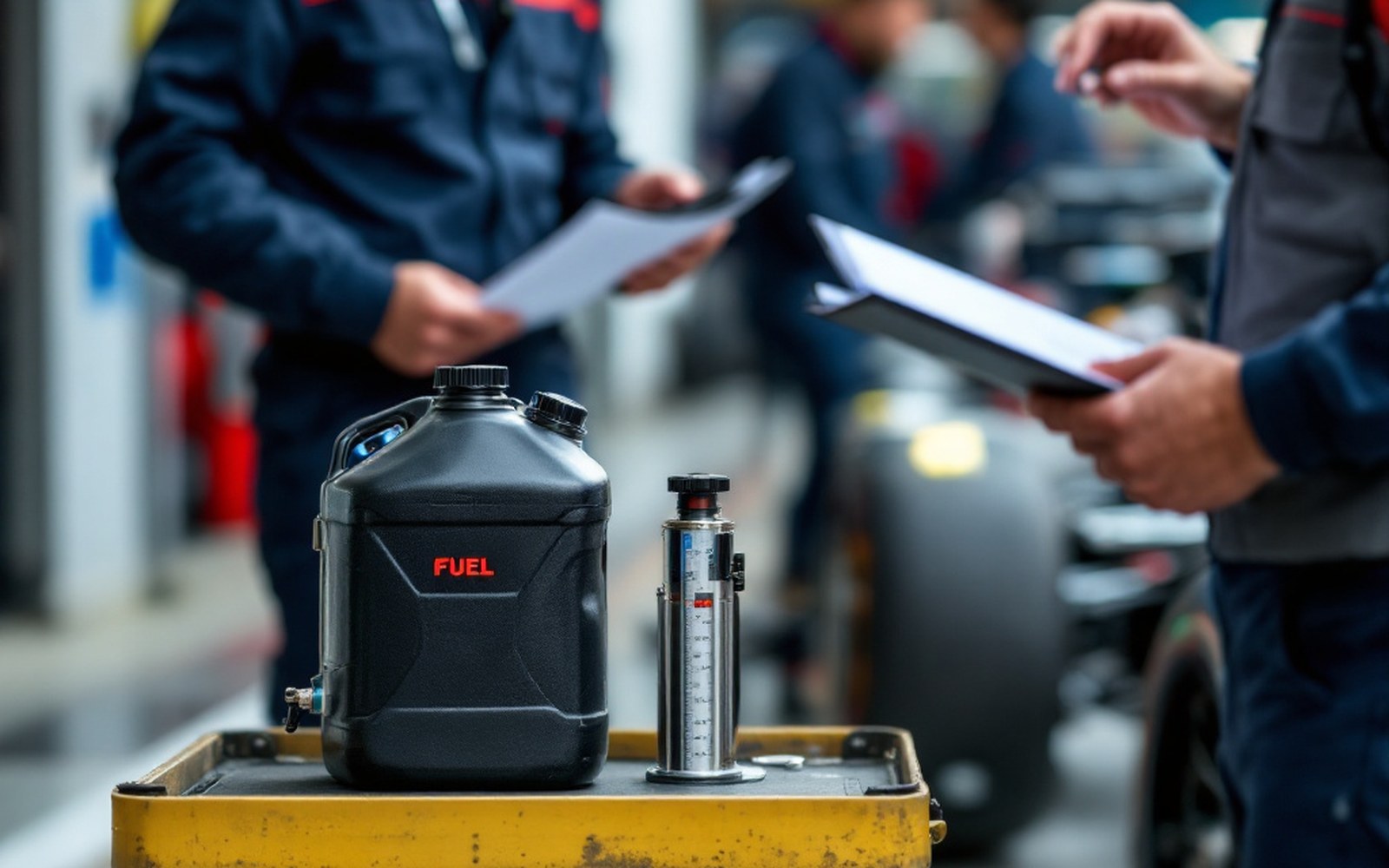
When FISA prohibited mid-race refuelling for the 1984 Formula One season, it simultaneously fixed the maximum fuel a turbocharged car could carry at 220 litres for the entire race distance. The prohibition was not primarily a safety measure — it was a throttle on power. An engine that might run on full boost for qualifying is a different machine when every kilogram of fuel burned is irreplaceable. Bernard Dudot at Renault Sport and Paul Rosche at BMW Motorsport both understood immediately that the rule had changed the fundamental engineering problem: it was no longer about peak output but about energy budget.
The 220-litre limit applied only to turbocharged cars; naturally aspirated engines remained unrestricted, carrying however much their teams thought necessary for the circuit. That asymmetry was the point. FISA's equivalence formula had long tried to balance 1.5-litre turbos against 3-litre atmospheric engines, and the fuel allowance was a new tool in that negotiation — one that promised to tighten with each revision.
The three numbers
For 1986 it tightened dramatically. The allowance dropped to 195 litres, which sounds modest against the previous year until you recall that turbo outputs had climbed in the interim. Teams were now being asked to do the same distance on less fuel while the engines they were running were, if anything, thirstier at race settings than their 1984 predecessors. The response was predictable and ingenious: fuel management became a discipline in itself. Drivers received information from engineers about consumption rates during the race, and lifting-and-coasting — briefly closing the throttle before braking zones to save fuel — became a documented part of race craft, not an admission of mechanical trouble.
The allowance dropped to 195 litres, which sounds modest against the previous year until you recall that turbo outputs had climbed in the interim.
02The 150-litre clause and what it actually demanded
For 1987 the number fell again, to 150 litres. This was the figure that truly defined the character of the late turbo era. Honda's RA167E, the engine that powered the Williams FW11B to the constructors' title that year, had to deliver competitive race power while managing energy consumption over a full grand prix distance on a fuel load that a contemporary road car might carry without thinking twice. The engineering inside that constraint was substantial: variable boost mapping, driver-selectable power modes, and careful thermal management to avoid the fuel-consumption penalty that came with incomplete combustion.
Renault Sport had pioneered turbocharged Formula One but had already announced its withdrawal from the category. BMW Motorsport, which had pushed qualifying outputs to figures that remain extraordinary even by modern standards, had likewise exited by 1987. The teams still running turbos — Honda-powered Williams and Lotus, Ford-Cosworth powered Benetton, Ferrari — all had to solve the 150-litre problem while the Cosworth DFZ atmospheric engine in slower cars carried whatever its tank held.

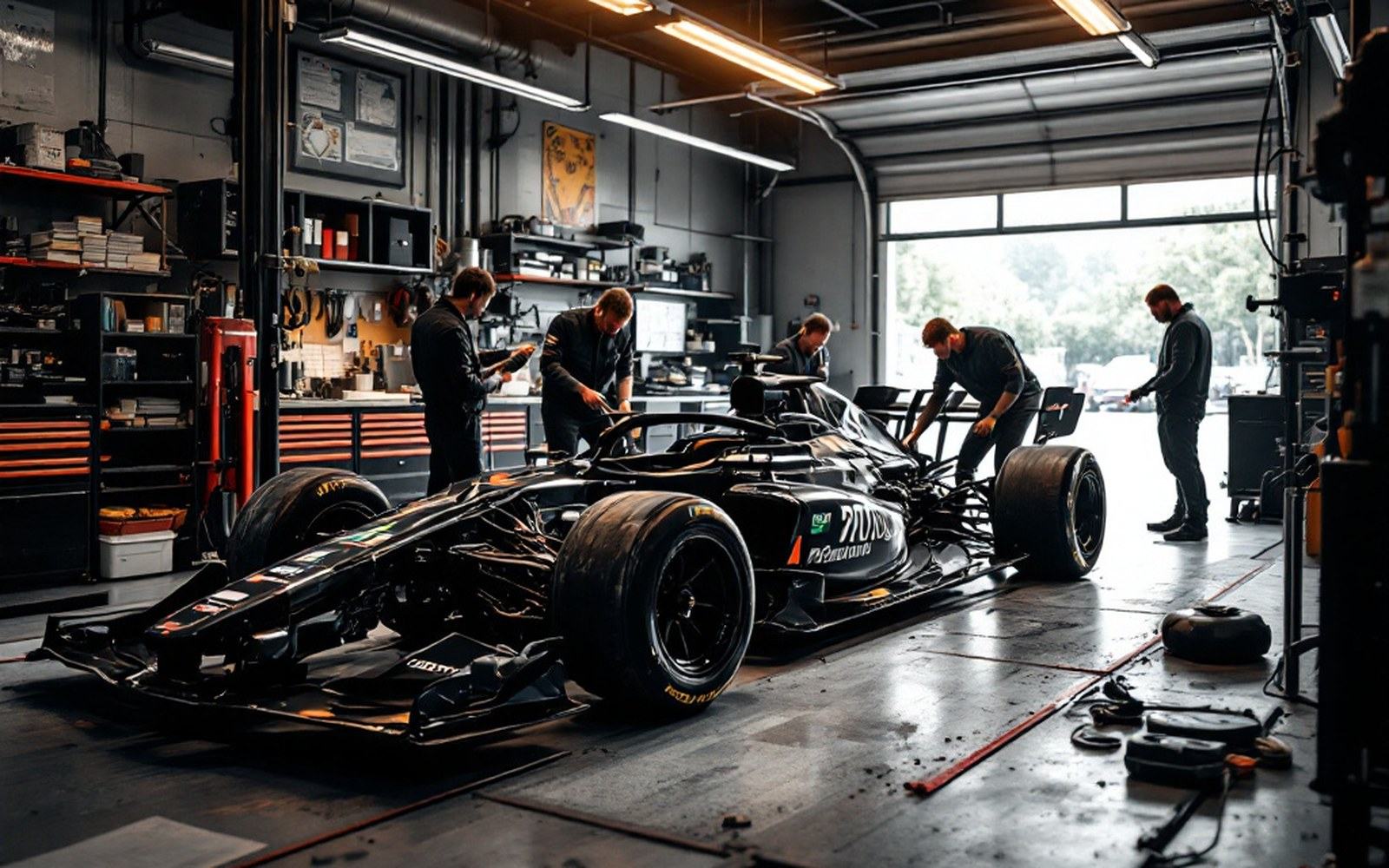
The 150-litre rule also shaped chassis design in ways that mattered. A full fuel load at the start of a race represented a significant fraction of the car's minimum weight, and as it burned the balance changed. Colin Chapman's philosophy at Team Lotus had always attended closely to weight distribution over a stint; the fuel-tank position and its effect on handling through a tank-to-empty transition was a known engineering variable, but the fixed allowance made it a predictable one. You knew exactly how much weight would leave the car and at roughly what rate, which gave designers a tighter brief.
That the turbo formula was abolished entirely after 1988 — the 1.5-litre turbo era ending by regulatory choice rather than technical failure — meant the 150-litre figure never had a successor within its own class. The boost limits imposed by the mandatory pop-off valve for 1987 and 1988 worked alongside the fuel allowance rather than replacing it; both were parts of the same programme of managed reduction. The fuel number was perhaps the more elegant instrument, because it constrained the engineers at the energy level rather than at the mechanical one, and let them work out, with their own ingenuity, how to live within it.