1.5-litre turbos
The equivalence had been in the rulebook since 1966. It took eleven years and a French manufacturer to read it seriously.
01The sentence that started it
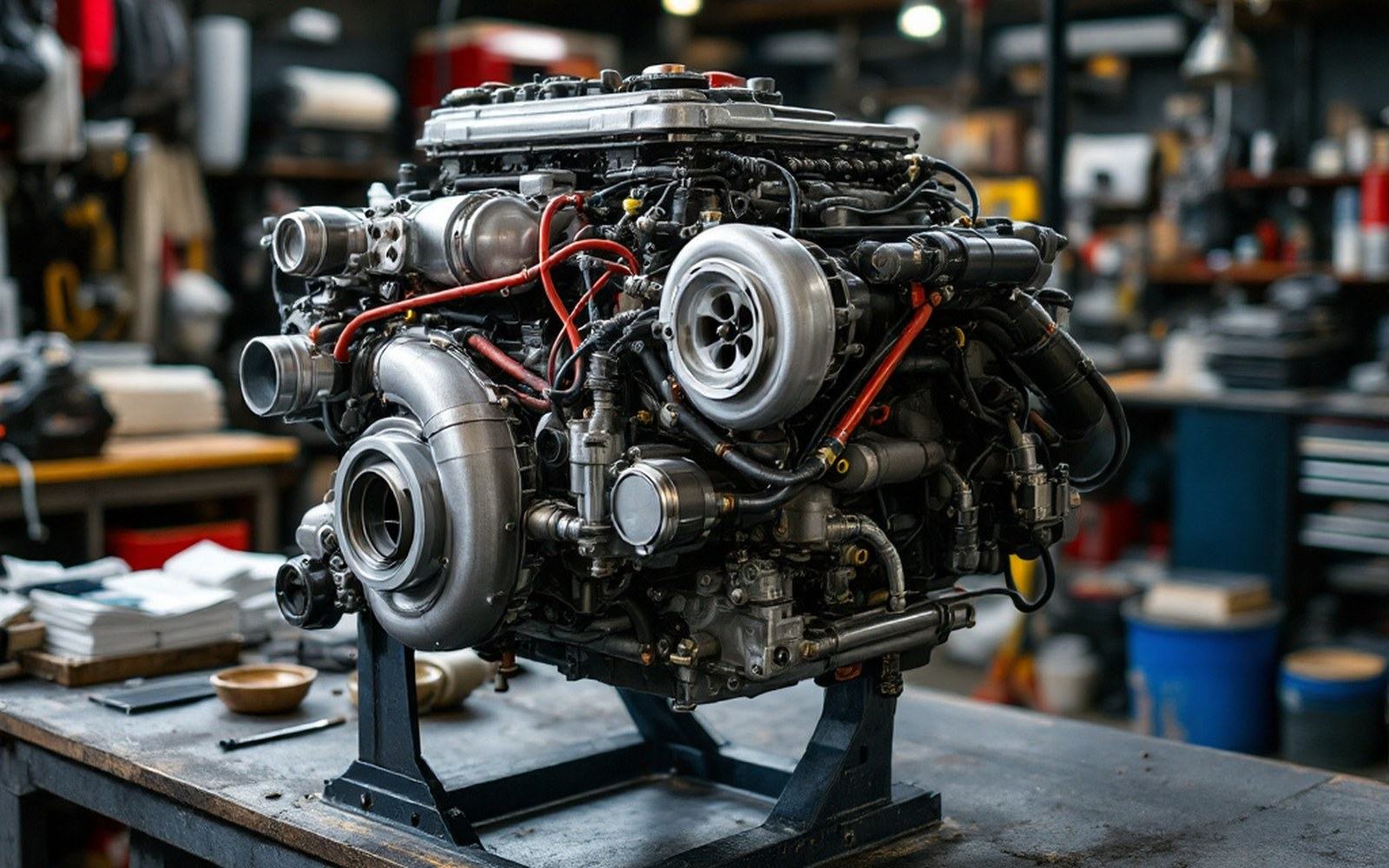
When the FIA rewrote Formula One's technical regulations for 1966, it set two parallel limits: three litres for normally aspirated engines, 1.5 litres for any engine fitted with a supercharger or turbocharger. The reasoning was a rough equivalence of power potential — compressors were understood to multiply output, and halving the displacement was meant to keep the two routes broadly competitive. Nobody tested the logic. For more than a decade, every serious Formula One engine builder — Cosworth, Ferrari, Ford — went atmospheric and went to three litres, because the Cosworth DFV had already made that formula economically sensible. The 1.5-litre turbo clause sat in Appendix J like a footnote in a contract nobody had read to the end.
Renault read it. The company had been running turbocharged engines in endurance racing through the mid-1970s, accumulating hard knowledge about how a turbocharger behaved under sustained load. Bernard Dudot led the engine programme; the project was housed within Renault Sport, the motorsport division that would carry the work into Formula One. The decision to attempt a Grand Prix entry with a 1.5-litre turbocharged unit was made internally before most of the paddock took it seriously, which is precisely why it succeeded.
02The engineering problem and how it was solved
The technical obstacle was not output — a turbocharger can always be turned up — but response. Lag, the delay between a driver pressing the throttle and the turbine spooling to useful pressure, made a turbocharged engine difficult to drive out of slow corners. Renault's engine, the EF1 V6, entered its first race in 1977 at Silverstone, and the car retired. For two seasons the Renault RS01 and its successors were unreliable — and conspicuously slow in the corners where lag cost most. The paddock called it the yellow teapot. The name acknowledged the exhaust steam produced by reliability failures as much as it mocked the concept.
Bernard Dudot led the engine programme; the project was housed within Renault Sport, the motorsport division that would carry the work into Formula One.
The team's persistence is the part that matters. Dudot and his engineers worked systematically through compressor maps and intercooler packaging. The intercooler — a heat exchanger that cools compressed air before it enters the combustion chamber, increasing density and therefore power — was a critical component; denser charge air meant the engine could burn more fuel per cycle without detonating. The packaging problem was that effective intercoolers are large, and Formula One cars in the late 1970s were also wrestling with ground-effect aerodynamics that demanded specific underfloor geometry. Renault solved the cooling problem by routing the charge through a side-mounted unit, accepting the aerodynamic compromise as a price worth paying.
By 1979 the reliability was adequate and the power was substantial. Jean-Pierre Jabouille, driving the Renault RS10, won the French Grand Prix at Dijon-Prenois on 1 July 1979 — the first World Championship race won by a turbocharged engine. The margin of victory was not enormous; Jabouille's teammate René Arnoux fought Gilles Villeneuve for second place in the closing laps in one of the most-watched moments in Formula One history. But the win was the proof of concept the rest of the paddock needed, and the response was rapid.
03The era takes shape
Ferrari, who had the resources to move quickly, flew a turbocharged car by 1981. Brabham, under Gordon Murray's technical direction, ran BMW Motorsport's four-cylinder M12/13 unit — a derived production block that Paul Rosche and his team in Munich had developed into something extraordinary. The BMW engine was compact, its short stroke allowing very high revs, and it was homologated in a package that proved exceptionally receptive to boost pressure. Nelson Piquet took Brabham's world championship with it in 1983.
Named in this entry
Bernard Dudot
Renault Sport
Led the turbocharged programme that made the 1.5-litre equivalence real, eleven years after the regulations first allowed it.
Paul Rosche
BMW Motorsport
Built a turbocharged four-cylinder from a production block, and pushed qualifying outputs past the equipment used to measure them.
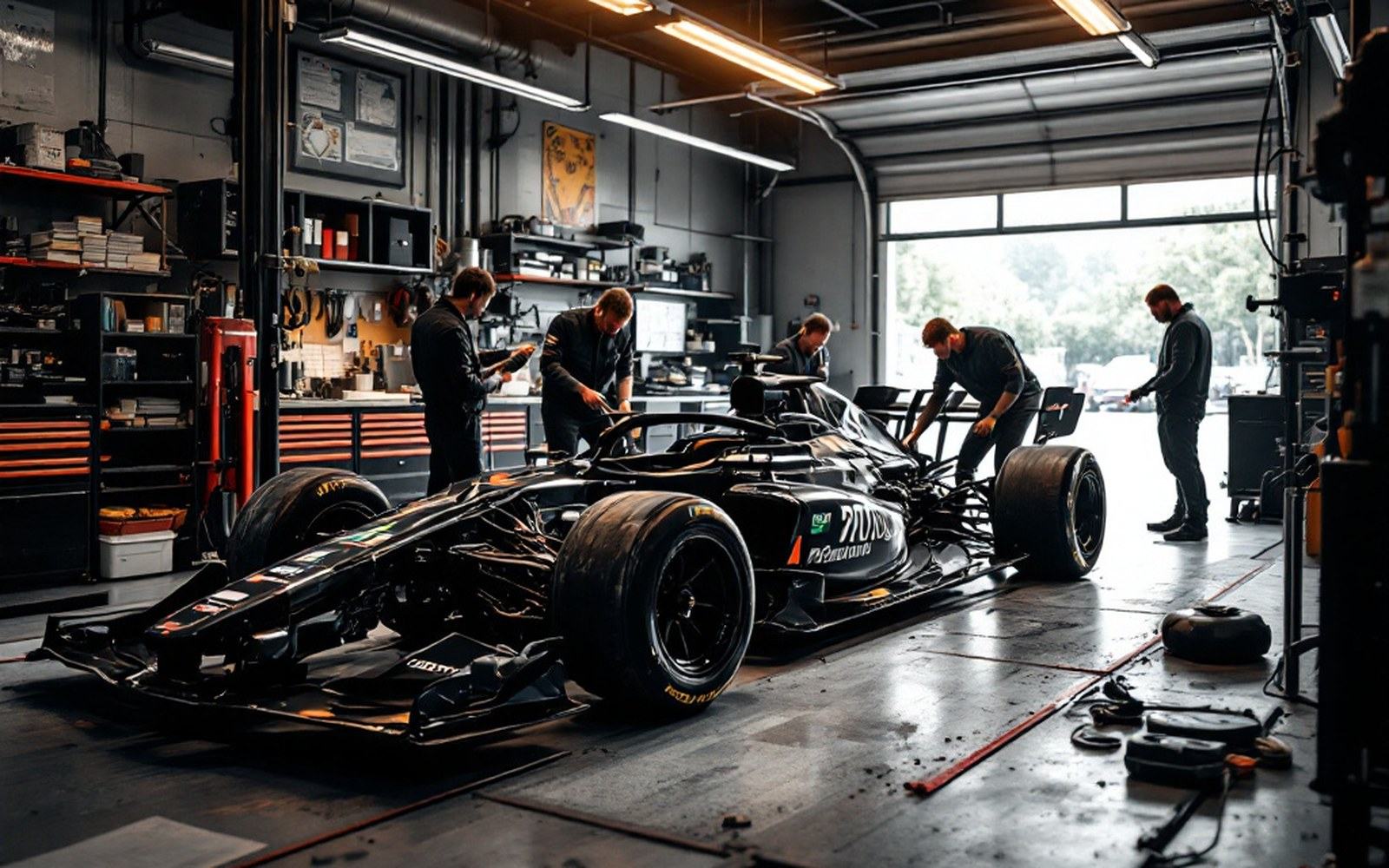
Honda re-entered Formula One with a turbocharged V6 developed within Honda's racing division, which eventually powered Williams and then McLaren to successive constructors' championships. By the mid-1980s the normally aspirated three-litre engine was effectively obsolete at the front of the grid; the turbo teams were operating at power levels that the atmospheric runners could not approach.
The power figures were, by any contemporary standard, extraordinary. In qualifying trim — where engines were run for a single lap at maximum boost on specialised fuel blends, then frequently rebuilt — outputs of well over 1,000 brake horsepower were claimed by several manufacturers. These were not figures that could be verified under race conditions; the engines ran at lower boost to survive a race distance. The gap between qualifying output and race output was itself a kind of engineering statement: the hardware could produce far more than the fuel and cooling systems could sustain for an hour and a half.
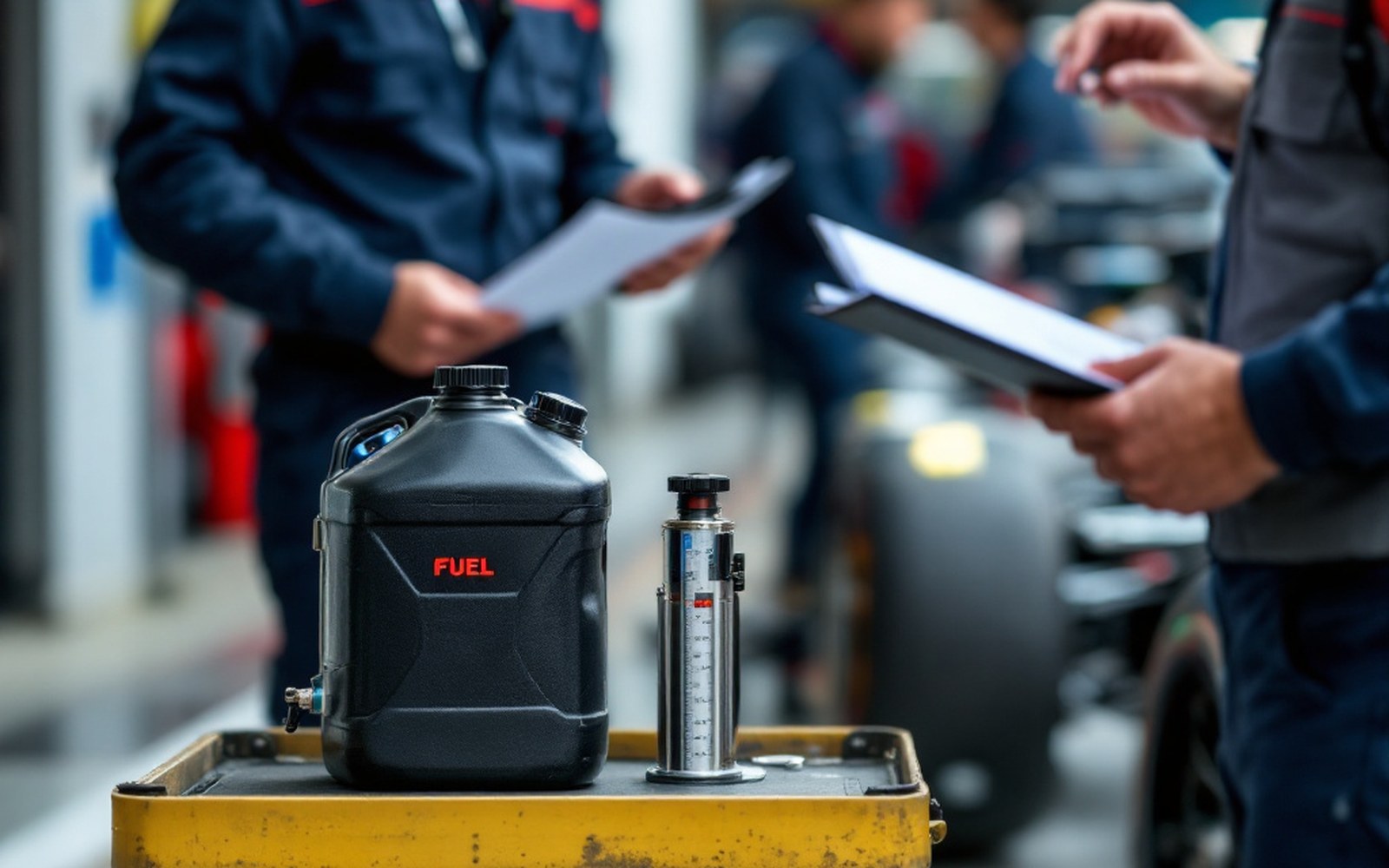
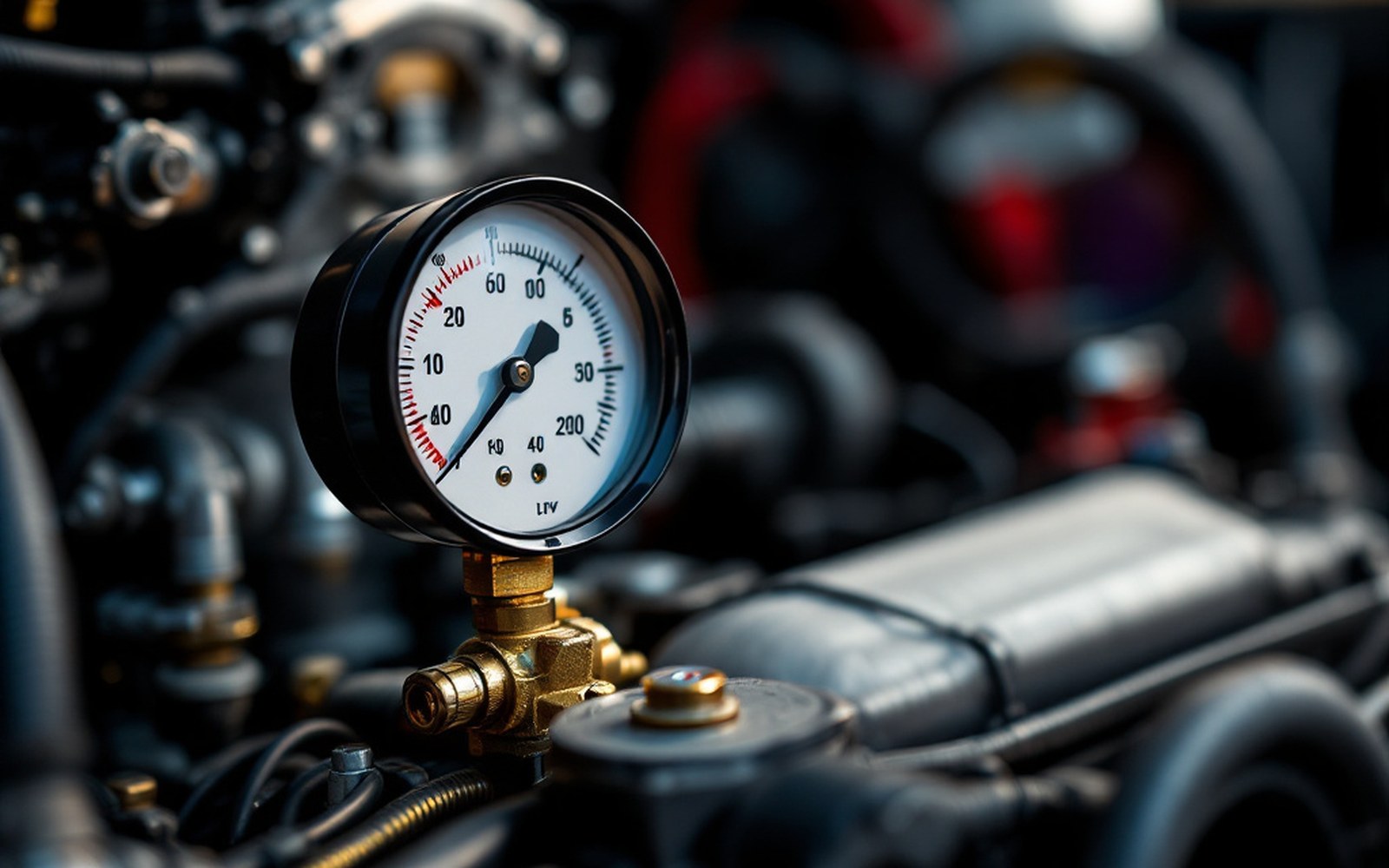
This is the context in which the FIA began to act. A pop-off valve — a pressure-relief device set to a fixed limit — was mandated from 1987 at 4 bar absolute, then reduced to 2.5 bar for 1988. The fuel allowance was capped. The intention was graduated: hold the power while other categories caught up, then use the fuel limit to force it down. For 1989, turbocharged engines were banned entirely, and Formula One returned to normally aspirated three-litre units.
04What the equivalence actually meant
The 1.5-litre turbo formula was never a controlled equivalence. The FIA's 1966 drafters assumed compressors would add perhaps a factor of two to specific output; by 1986 the factor was closer to four or five at peak qualifying boost. The rulebook's single sentence — displacement halved, compressor permitted — had no mechanism to prevent that. A pop-off valve is a blunt instrument: it limits peak pressure but not the efficiency with which that pressure is converted into power, and engine builders worked on both intercooler efficiency and fuel chemistry in response.
What the era produced, in engineering terms, was the fastest Formula One cars the sport had run to that point. What it also produced was a set of lessons about open-ended equivalences: a clause that names a number without specifying how that number is to be constrained will be explored to its limit by every engineer in the room. The 1.5-litre turbo formula is the clearest example in the sport's history of a technical permission whose full consequences were not anticipated when it was written, and which reshaped the championship before anyone with authority had decided what to do about it.