Audi Quattro
The four-wheel-drive rally car that existed only because a rule had never been written to stop it
01The clause that opened the door
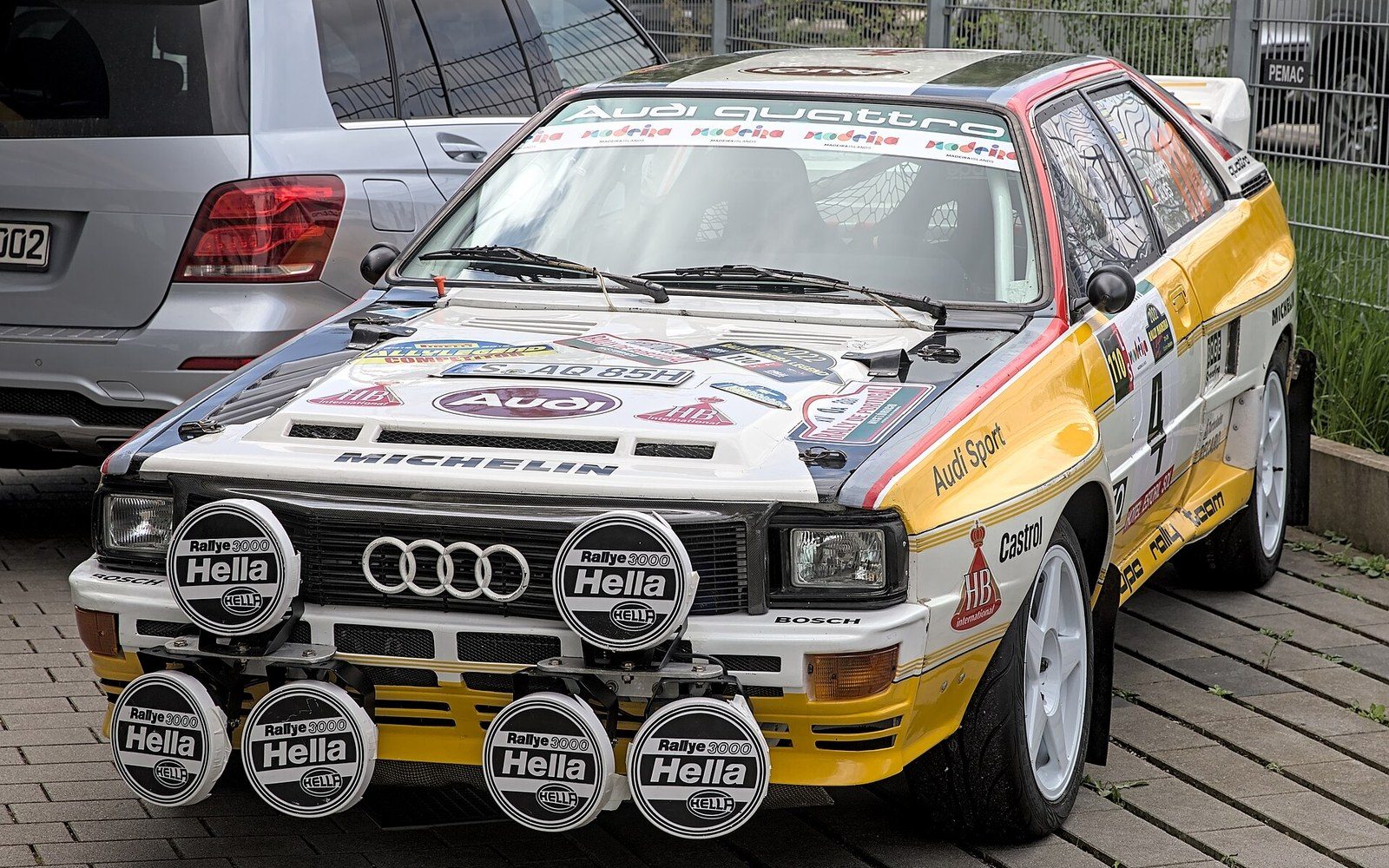
For most of rallying's pre-Group B life, all-wheel drive was effectively absent from the top category — not because a regulation explicitly banned it, but because no constructor had seriously tried it in a homologated road car. When the FIA's Appendix J was rewritten ahead of the 1982 season, it specified what cars must be but was silent on how power reached the ground. At Ingolstadt, Ferdinand Piëch, then Audi's head of technical development, had already recognised that silence as an invitation. The Quattro — named directly for its defining system — had been conceived as a road car in the late 1970s, and the moment homologation rules required only two hundred road examples to qualify for Group B, Audi Sport had a path straight to the startline.
The car that arrived in 1981, technically under the transitional Group 4 rules and then in Group B from 1982, carried a turbocharged five-cylinder engine mounted longitudinally ahead of the front axle. The four-wheel-drive system was a development of a transfer case first used on the Volkswagen Iltis military vehicle — unglamorous lineage, but the engineering was sound. Peak power in standard form was around 300 bhp; it rose considerably in competition specification as the decade progressed. Weight was the trade-off. The car was big, heavy by rally-car standards, and the long nose created handling characteristics that demanded exceptional inputs to manage, especially when the front end began to push wide under hard cornering.
Chronology
- 1979–80Quattro road car developed internally at Audi, Ingolstadt
- 1981Quattro enters international rallying under transitional Group 4 rules
- 1982Group B era begins; Mouton wins three WRC rounds; Röhrl wins Monte Carlo
- 1984Sport Quattro homologated; Röhrl wins Monte Carlo again
- 1985–86Sport Quattro S1 deployed in extreme evolution specification
- End of 1986Group B cancelled by the FIA
02What it meant on a stage
Two drivers defined the Quattro's competitive arc more sharply than any other. Michèle Mouton won four World Rally Championship rounds between 1981 and 1982, becoming the first woman to win a WRC event outright — a fact that remains unchanged in the record books. Her co-driver throughout that run was Fabrizia Pons. Walter Röhrl, brought in alongside other works drivers, brought a precision that squeezed the best from a car that punished rough technique. Röhrl won the 1982 Monte Carlo Rally in the Quattro, then the 1984 edition; his public statements about the car's weight and balance were candid enough to become part of the historical record without needing embellishment here.
Peak power in standard form was around 300 bhp; it rose considerably in competition specification as the decade progressed.
The competitive advantage of four-wheel drive on loose surfaces — gravel, snow, ice — was immediate and measurable. It was less decisive on asphalt, where the additional mechanical complexity and weight worked against the car. Opponents noticed and began the engineering race that produced the Peugeot 205 T16 and, from Abarth in Turin, the Lancia Delta S4: mid-engined, lighter, purpose-built from the outset as a competition car wearing a road-car body only far enough to satisfy the production minimums the rules required.
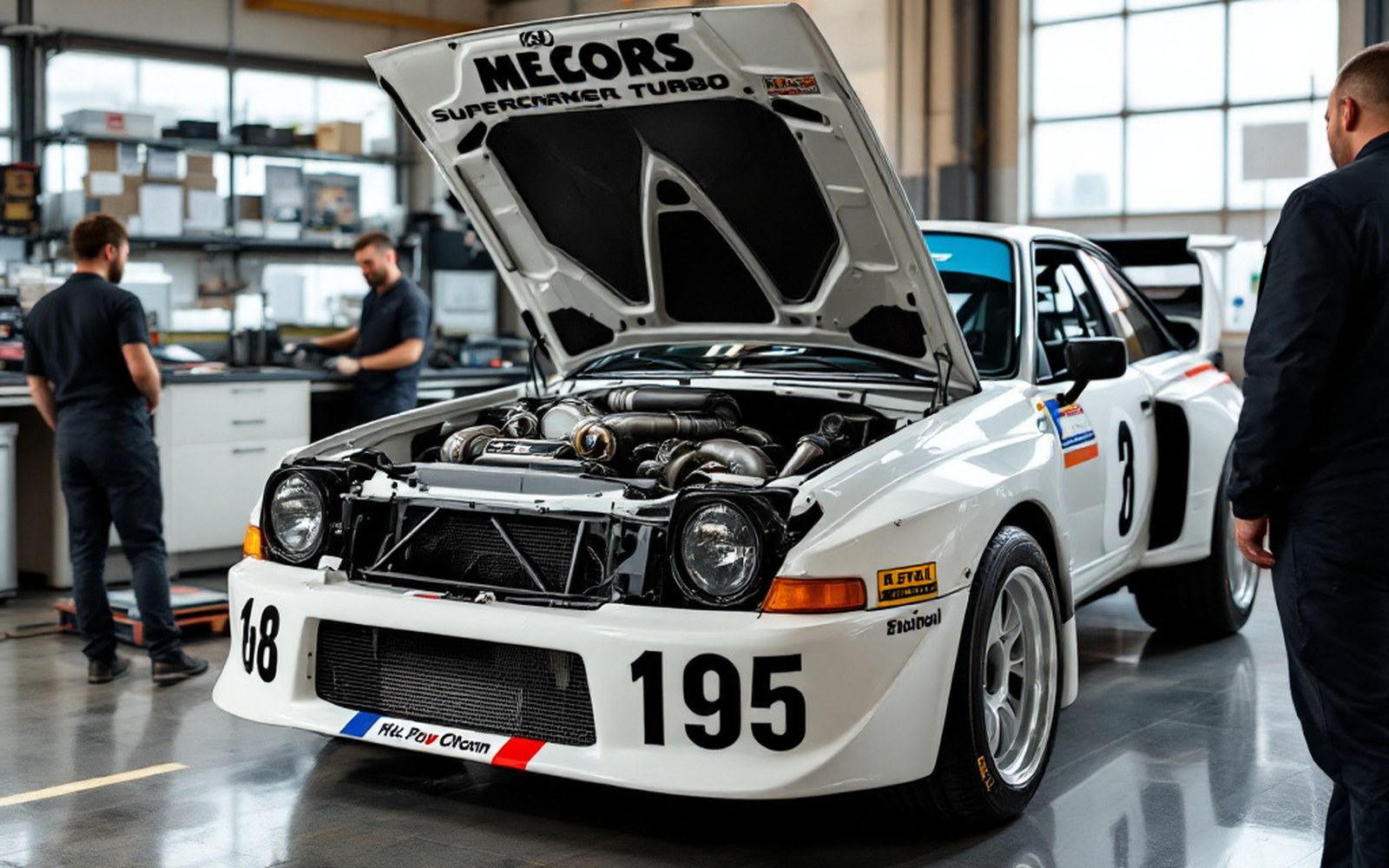
Audi's response was the Sport Quattro, a shorter-wheelbase, wider-arched variant homologated from 1984. It shed weight and tightened the car's geometry, but mid-decade it remained outpaced by cars whose fundamental architecture was a better match for the regulations. The Sport Quattro S1, in its most extreme evolution form, developed well over 500 bhp and remains one of the most visually aggressive cars that era produced — rear-biased aerodynamic additions driven by necessity rather than aesthetics.
Group B was cancelled after the 1986 season, following fatal accidents to drivers and, at the Tour de Corse that year, to the crew of Henri Toivonen and Sergio Cresto, with spectators also hurt in Portugal. The Quattro had, in five seasons, changed what four-wheel-drive meant in competition. Every serious all-wheel-drive rally car built since is descended from a logic the Ingolstadt engineers formalised — that if the rules did not forbid it, and physics rewarded it, you built it.