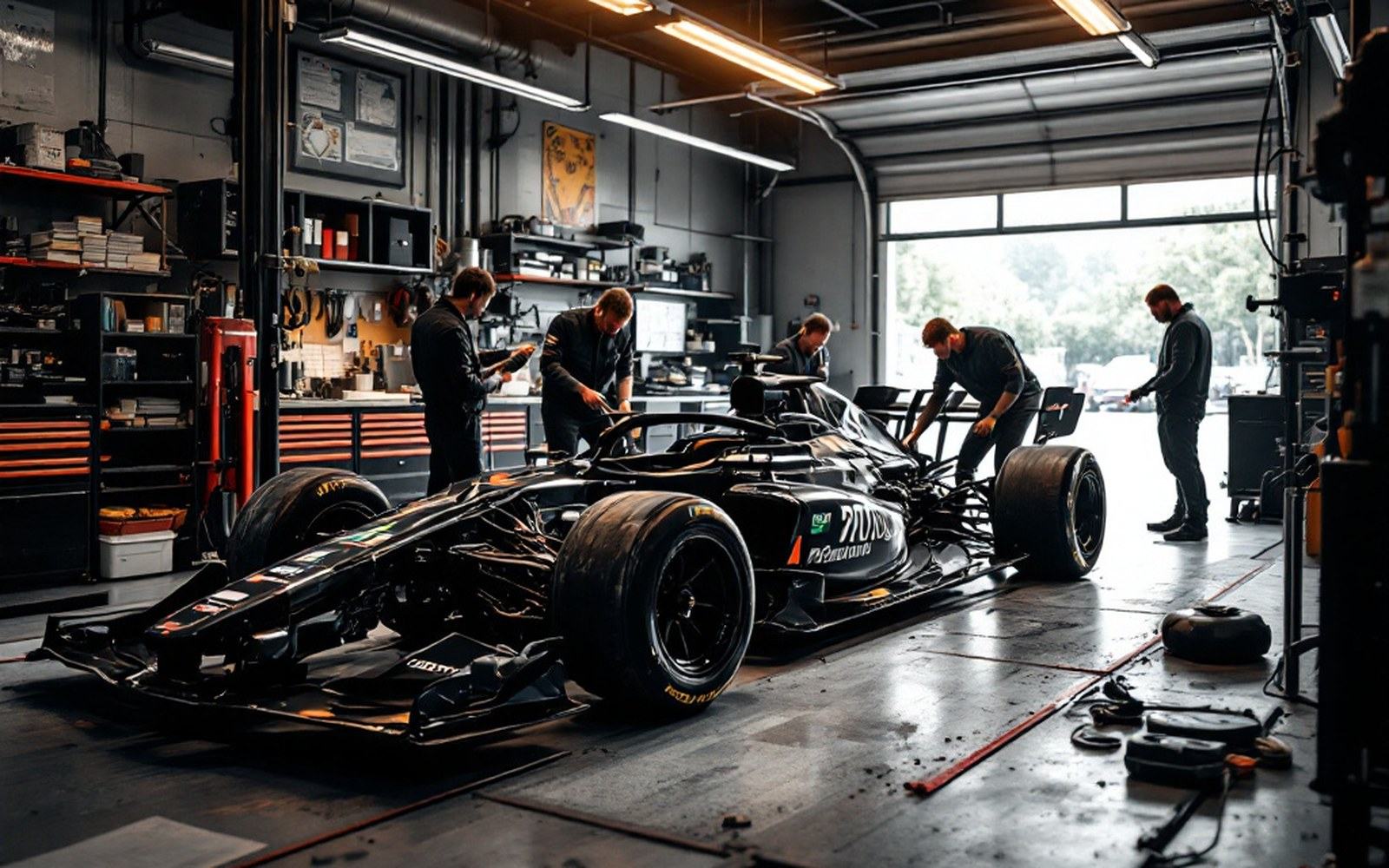
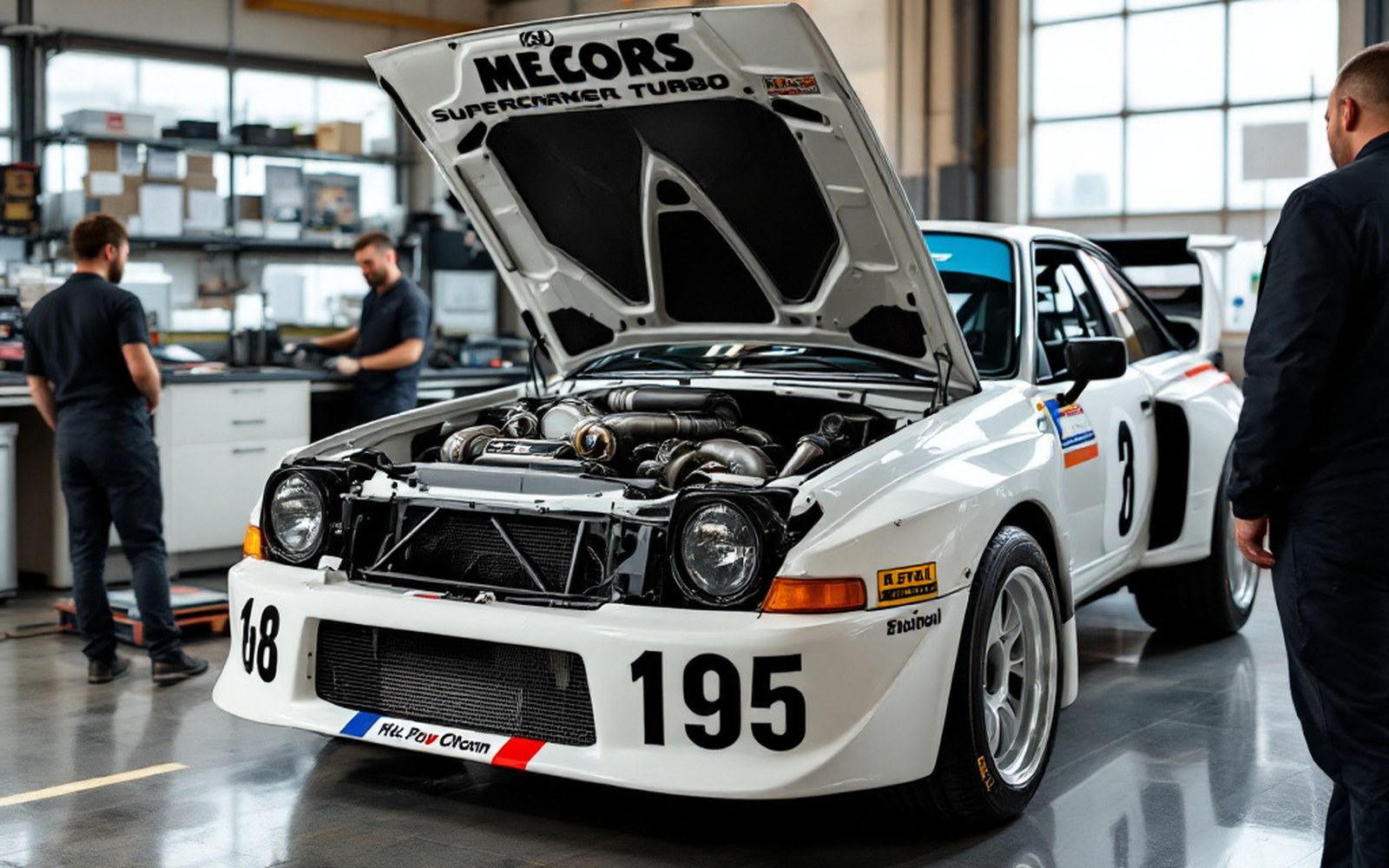
Group B
The class that wrote a permissive rulebook, attracted engineers willing to use it, and was abolished four years later when the consequences became undeniable.
01A rulebook built for imagination
When FISA drafted the regulations that would govern Group B from 1982, the framework was deliberately open. Earlier group structures had tied manufacturers to production volumes in the thousands, demanding that a rally car trace its lineage directly to something a showroom customer could buy in quantity. Group B cut that number to two hundred examples built across twelve consecutive months — just enough to demonstrate that the homologation car existed as a real object, not a paper exercise. Four-wheel drive was permitted. Turbocharging was permitted. Supercharging was permitted. Engine displacement limits applied in a broad, tolerant way, and there was no cap on power outputs or aerodynamic treatment beyond what the homologation form, the fiche, recorded. If it was on the fiche, it was legal. If it was not, it was not.
That single document — the fiche — became the architectural drawing of the class. Manufacturers lodged their homologation papers with the FIA specifying dimensions, weights, engine configurations and suspension geometry, and the fiche fixed what the car was; anything not on it was illegal, which gave scrutineers a precise instrument while simultaneously giving engineers a precise target to write clever things into. Beyond that document, the rules were largely silent, and silence in a competition regulation is an invitation.
The production minimum also enabled what the regulations called evolution variants: up to twenty examples of a substantially modified version, homologated on top of the original two hundred. Evolutions could carry different engine specifications, different aerodynamic packages and revised suspension. In practice they produced a parallel, faster class running inside the same category, wearing the same badges but sharing very little with the cars that had established the homologation in the first place.
02What the engineers made of it
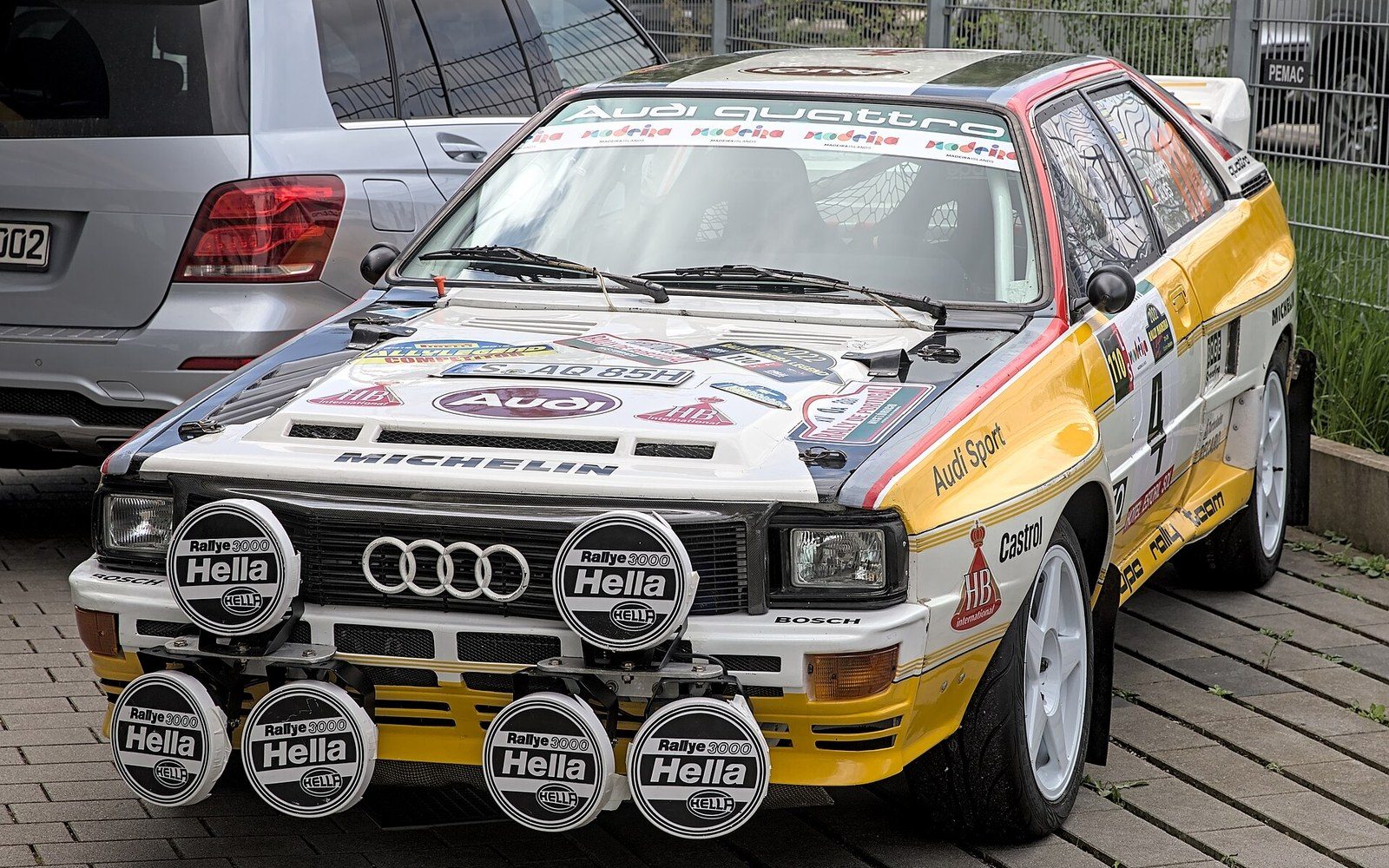
Audi Sport arrived first and most visibly. The Audi Quattro, developed in Ingolstadt from a four-wheel-drive system originally conceived for a military vehicle, was homologated for Group B in 1981 ahead of the category's formal opening. Its Ur-Quattro lineage was genuinely road-going — far more so than most of what followed — and its initial impact came not from extreme power but from traction. Drivers including Walter Röhrl and Michèle Mouton demonstrated that permanent four-wheel drive could neutralise surface penalties that had previously determined results. The technical implication was clear to every manufacturer watching.
Chronology
- 1981Audi Quattro homologated ahead of Group B's formal opening
- 1982Group B category formally active
- 1983–85Peugeot 205 T16 and Lancia Delta S4 homologated; four-wheel-drive mid-engined cars dominate
- 1986 (March)Deaths at Rally de Portugal; (May) Henri Toivonen and Sergio Cresto die at Tour de Corse
- 1986FISA abolishes Group B; Group A takes over for 1987
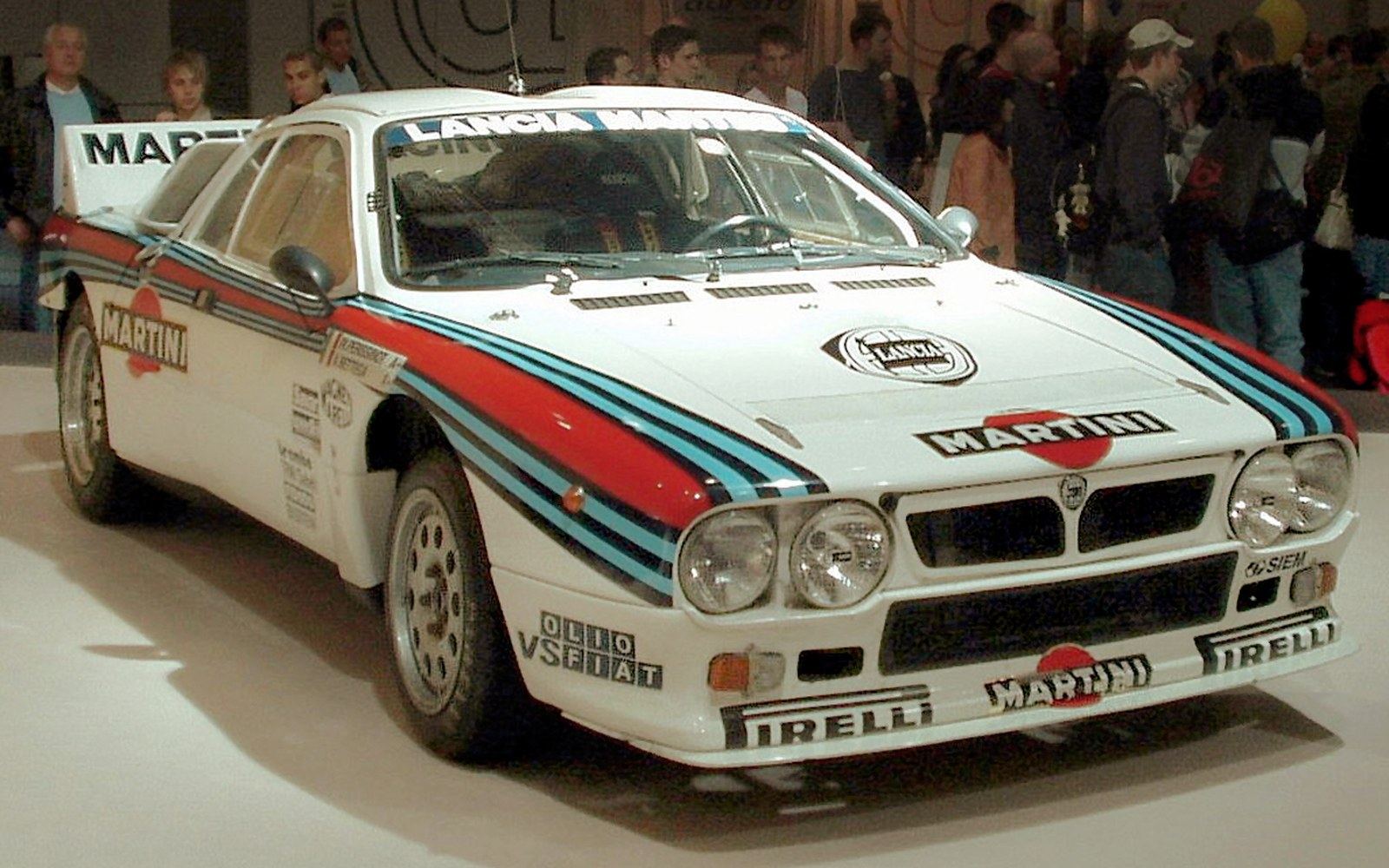
Lancia's response came from Abarth in Turin, where Sergio Limone led the engineering of the Delta S4. Abarth had read the rulebook without sentiment. The S4 used both a supercharger — for response at low revs — and a turbocharger in series, combined in a configuration the regulations nowhere prohibited. Lancia Delta S4 carried a composite bodyshell over a steel spaceframe, mid-engined and four-wheel drive, and bore its Delta name as little more than a homologation courtesy to a hatchback it structurally resembled not at all.
Peugeot Talbot Sport took the same foundational logic — mid-engined, four-wheel drive, composite body sharing only a visual identity with a production car — and applied it with the 205 T16. Jean Todt ran the programme; the engineering was built around a turbocharged four-cylinder producing outputs that varied by specification but were, by the standards of the day, formidable for an engine of that size. The Peugeot was lighter and more compact than the Quattro and more than competitive with the S4.
That single document — the fiche — became the architectural drawing of the class.
Ford, Opel, MG and others operated in the class at lower intensity, building cars that were closer to the conventional interpretation of a homologated competition machine. They were present, but the front of the field by the middle of the decade was contested almost exclusively between Audi, Lancia and Peugeot, with the performance envelope rising each season as evolution models pushed specifications further from anything a private buyer could register for the road.
031986 and the termination
By 1986 the cars were producing power that no contemporary tyre technology could fully manage on loose surfaces. Service intervals were being extended, pushing machinery that had reached its thermal and mechanical limits. Spectator control at closed-road events — rallies run on public roads in Portugal, Corsica, and across much of Europe — had not kept pace with the speeds the cars were now reaching.
The 1986 season ended Group B. At the Rally de Portugal, a crash into spectators standing on the stage caused deaths and injuries. At the Tour de Corse in Corsica, Henri Toivonen and his co-driver Sergio Cresto died when their Lancia Delta S4 left the road and caught fire. The car burned to an extent that prevented investigators from establishing the precise cause of the crash. FISA moved immediately after Corsica: Group B was formally abolished for 1987, with no replacement category carrying the same performance ceiling or the same permissive construction rules.
The speed of the abolition reflected the politics as much as the engineering. There had been pressure before 1986 to control the class — proposals for boost limits, weight minima, mandatory rollcage standards — and there was a successor category, Group S, already in development to succeed Group B with stricter safety requirements. Group S was cancelled before it ran a single competitive event. The FIA moved the top level of rally competition to Group A instead, which required five thousand road cars, restored a genuine link to production machinery, and placed meaningful limits on modification.
The four-year arc of Group B illustrates something that recurs in the history of competition regulation: a permissive rulebook does not produce dangerous cars by itself, but it concentrates engineering resource at the performance ceiling while leaving other considerations — driver safety, spectator management, fire suppression — to be dealt with by inherited convention rather than explicit mandate. The FIA's post-1986 rulemaking in rallying was explicit and detailed in exactly those areas the Group B regulations had been silent on.
What the class produced technically remains significant. The normalization of four-wheel drive in rallying, the composite construction methods refined under Group B homologation, the understanding of turbocharger mapping on loose surfaces — these passed into the engineering base of the sport and, eventually, into production cars. The sentence that mattered most in the Group B regulations was the one that set the production minimum at two hundred, because two hundred examples in twelve consecutive months is what separated Group B from a prototype class. It looked like a constraint. It worked, in practice, as the smallest credible threshold the regulators could defend — and engineers built some of the most extreme competition cars ever homologated inside it.
Named in this entry
Sergio Limone
Engineer, Abarth · Turin
Led the engineering of the Lancia Delta S4, which carried a supercharger and a turbocharger in series because the regulations prohibited neither.
Jean Todt
Team principal, Peugeot Talbot Sport
Ran the 205 T16 programme: mid-engined, four-wheel drive, and sharing a name with a front-wheel-drive hatchback it structurally resembled not at all.