Peugeot 205 T16
The car shared a name with a family hatchback and nothing else — Jean Todt's Peugeot Talbot Sport team built a mid-engined, four-wheel-drive machine that took back-to-back world titles in 1985 and 1986.
01A shell and a different car underneath
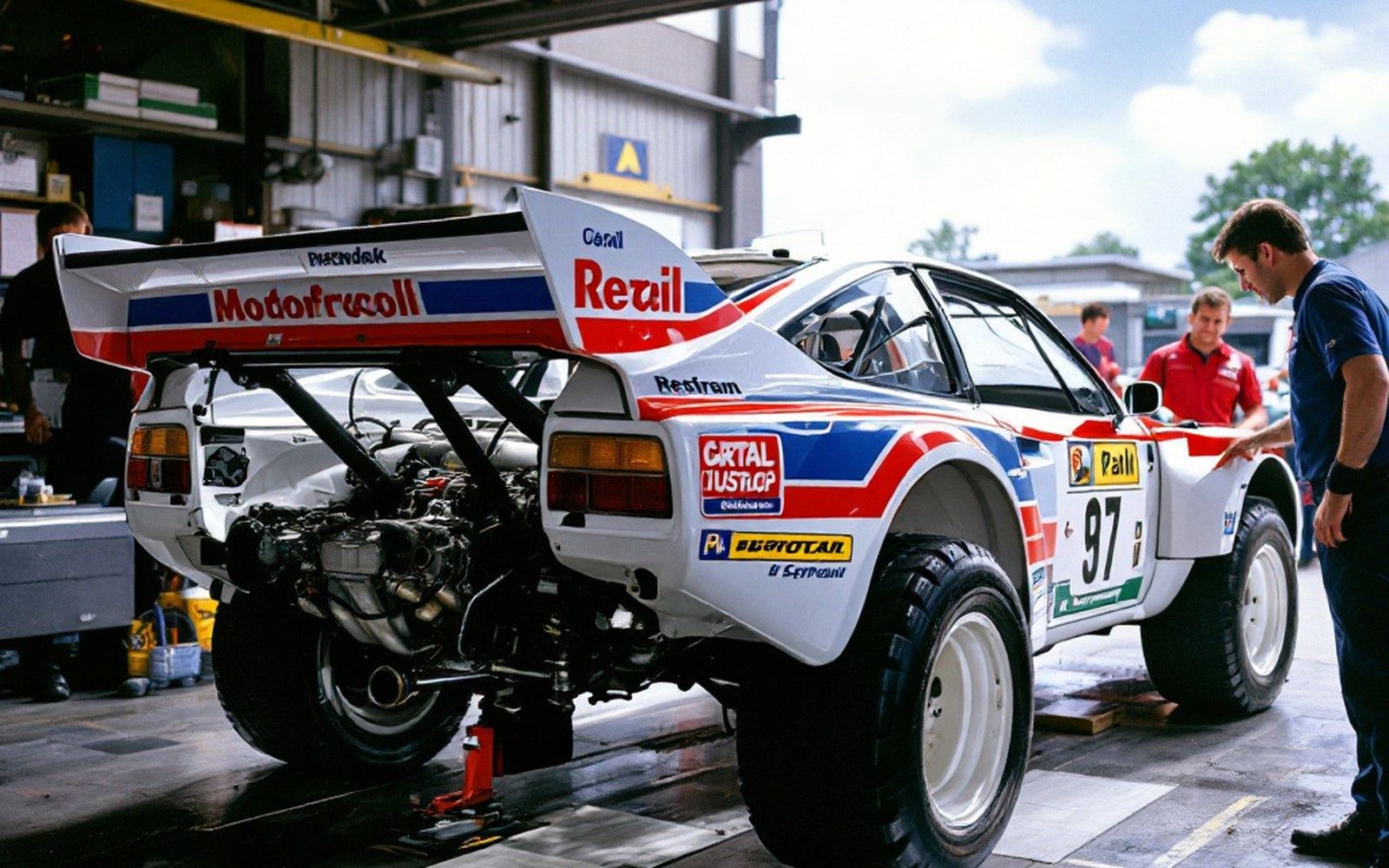
The 205 T16 wore the same sheet-metal nose and roofline as the ordinary 205 hatchback, a cosmetic gesture toward homologation credibility. Everything structural was new. The body was a composite shell over a steel spaceframe, the engine moved from the front axle to a position behind the driver, and power went to all four wheels through a five-speed gearbox of Peugeot Talbot Sport's own design. The turbocharged 1,775 cc inline-four, developed at the Abarth facility in Turin under engineer Sergio Limone, produced around 350 bhp in its original competition tune — a figure that climbed considerably as the evolution programme ran its course.
The word "evolution" mattered. Group B required two hundred examples built in twelve consecutive months for homologation, plus a further twenty evolution cars permitted on top of the base run. Peugeot Talbot Sport satisfied the production requirement through a short run of road-legal T16s — loud, stiffly suspended, barely practical — and then freed the engineers to chase performance with the evolution specification. The E2 variant, which appeared for 1986, pushed output toward 550 bhp, widened the bodywork to cover enlarged track dimensions, and revised the aerodynamic package front and rear. It was a fundamentally different vehicle from the road car that had unlocked the entry.
Chronology
- 1981Jean Todt appointed to lead Peugeot motorsport
- 1984T16 enters the World Rally Championship; debut win, Tour de Corse, Ari Vatanen
- 1985Manufacturers' and drivers' titles (Timo Salonen)
- 1986Drivers' title (Juha Kankkunen); Group B abolished at season end
02Jean Todt and the pace of the programme
Jean Todt had been appointed to lead Peugeot's motorsport effort in 1981, and the T16 project reflected his method: systematic, resourced to a level the small specialist operations could not match, and operated with a clear timeline. Peugeot Talbot Sport entered the World Rally Championship in 1984, the car's first season, winning its debut rally in Corsica with Ari Vatanen. The 1985 season brought the manufacturers' and drivers' titles, Timo Salonen taking the latter. In 1986 Juha Kankkunen repeated the drivers' championship for the team before the FIA closed Group B at the end of that year.
It was a fundamentally different vehicle from the road car that had unlocked the entry.
The driving roster was not accidental. Vatanen, Salonen, Kankkunen, and Bruno Saby each brought different strengths; the team also ran Michèle Mouton in selected events, her earlier Audi Quattro campaigns having already demonstrated what a woman driver could extract from a four-wheel-drive Group B machine at the limit. The T16 rewarded commitment and precision in roughly equal measure — the weight distribution, with the engine behind the driver, demanded different management of rotation than a front-heavy car, and the all-wheel-drive system's torque split was fixed rather than driver-adjustable.
03What the rulebook made
The reason the 205 T16 looked the way it did — composite tub, mid engine, wide-body evolution, a nominal relationship to a production vehicle — is that the FIA's Appendix J regulations for Group B defined a performance envelope without prescribing how to fill it. Four-wheel drive was permitted. There was no restriction on engine position. The minimum production run was low enough that a genuine motorsport manufacturer could meet it without building a true mass-market car. The result, across every constructor in the class, was a generation of vehicles engineered from the regulations outward rather than from a road car inward.
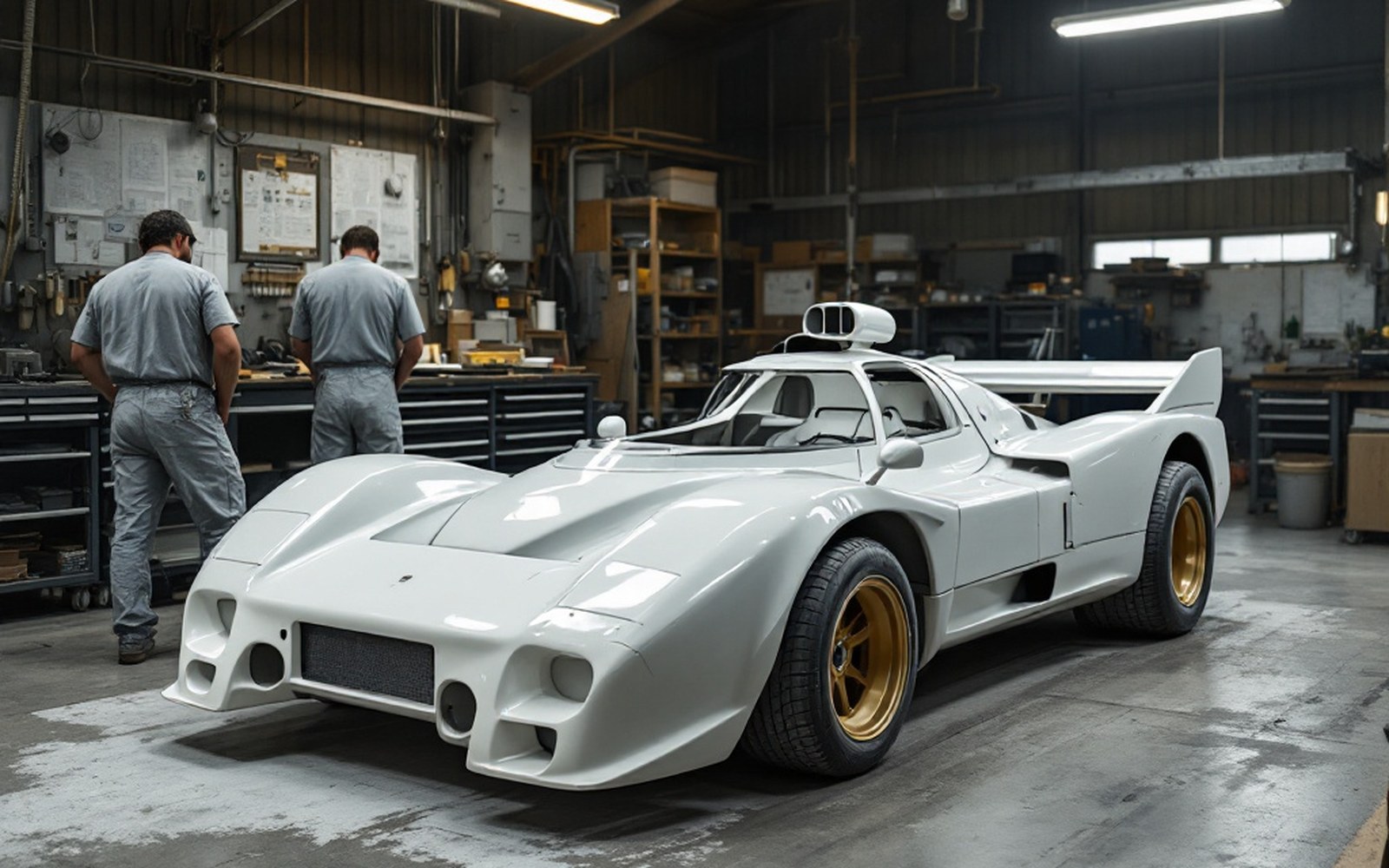
The Tour de Corse — Corsica's round of the championship — ended catastrophically in May 1986, and the class was abolished before the 1987 season. The T16 E2 in its final specification represents the furthest point reached before that door closed: roughly 550 bhp through four wheels, in a car notionally derived from a supermini. Every aspect of its shape, its layout, and its weight distribution can be traced to a sentence in a regulation or a number on a homologation document — which is the point of reading the rulebook before picking up the pencil.