Movable devices
The rule says aerodynamic devices must be fixed and immobile. The rule has never stopped being argued about.
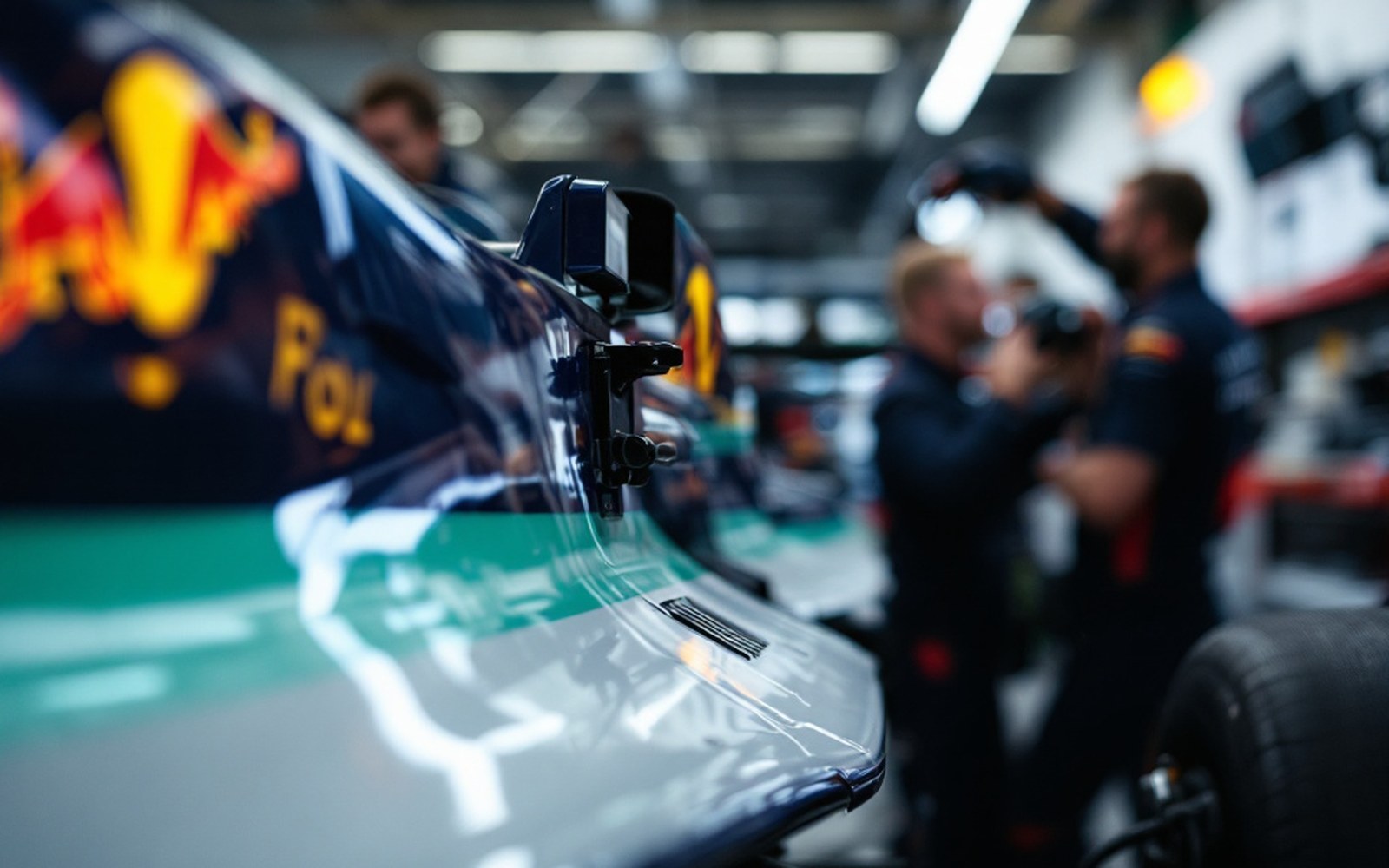
01The gap between fixed and moving
Formula One's prohibition on movable aerodynamic devices has been in the regulations for decades, and it has been rewritten, clarified and re-clarified at intervals that correspond almost exactly with the intervals between someone finding a way around it. The core intent is simple: a wing angle set in the garage should not change on track, because a device that generates downforce in corners while reducing drag on straights is worth enormous lap time, and the FIA cannot patrol that from the pit wall.
The first productive ambiguity was semantic. "Aerodynamic device" was interpreted by several constructors to cover only bodywork explicitly designed to generate downforce, which left suspension geometry, ride-height systems and engine mounts in a grey area. A component that changed its angle under load — through suspension travel, or through carefully chosen stiffness in a mounting — was arguably responding to structural force rather than being driven by aerodynamic intent. Appendix J and the technical regulations governing aerodynamic components define what must remain fixed, but the definitions have always required interpretation.
Chronology of clarifications
- Movable device prohibitionpresent in F1 technical regulations from early rulemaking
- Flexi-wing interpretationscontested actively through the 2000s and 2010s
- Static deflection tests introducedFIA response to running bodywork; load thresholds raised at intervals
Renault Sport and others ran flexi-wings — bodywork that measured correctly at rest in scrutineering but deflected under downforce at speed, altering its own angle of attack. The test was static load. The car ran at two hundred kilometres per hour. The gap between those two conditions was the loophole, and it persisted because measuring dynamic deflection on a racecar at speed requires instrumentation that scrutineers did not routinely carry. Teams designed the wing to pass the static test by building in the required stiffness at low load, then engineered the structure to deflect progressively beyond it.

The practical effect is that the word fixed has been operationally redefined, through protest, exclusion and clarification, into fixed within a tolerance measured by a specific test at a specific load at rest. Gordon Murray's Brabham BT46B, which extracted air from beneath the car via a fan ostensibly classified as a cooling device, demonstrated the same principle: the letter of one rule absorbed the intent of another. Every generation of designer has read the same sentence and found a different edge to its meaning, which is why the sentence keeps getting longer.