Corsica, 1986
The Tour de Corse was the last World Rally Championship round Group B ever completed. The regulatory record and the decision that followed it are the subject here.
01What the rules permitted, and what happened
Group B had been constructed on a simple premise: homologate two hundred road cars, and the competition version could be almost anything. Power outputs climbed through the early 1980s faster than the safety infrastructure around them. By 1986 the leading cars — the Peugeot 205 T16 Evo 2, the Lancia Delta S4 built by Abarth in Turin, the Audi Sport Quattro E2 — were producing outputs that no serious independent estimate put below 450 bhp, delivered through four-wheel-drive systems to cars weighing little more than 900 kilograms. Appendix J, the FIA's consolidated technical regulations, contained no power ceiling, no mandatory rollcage specification tied to actual energy levels, and no meaningful crowd-barrier requirement for special stages. The fiche — the homologation form that fixed what each car was — recorded dimensions and component lists; it did not record what the car would do when something went wrong at speed on a public road flanked by spectators.
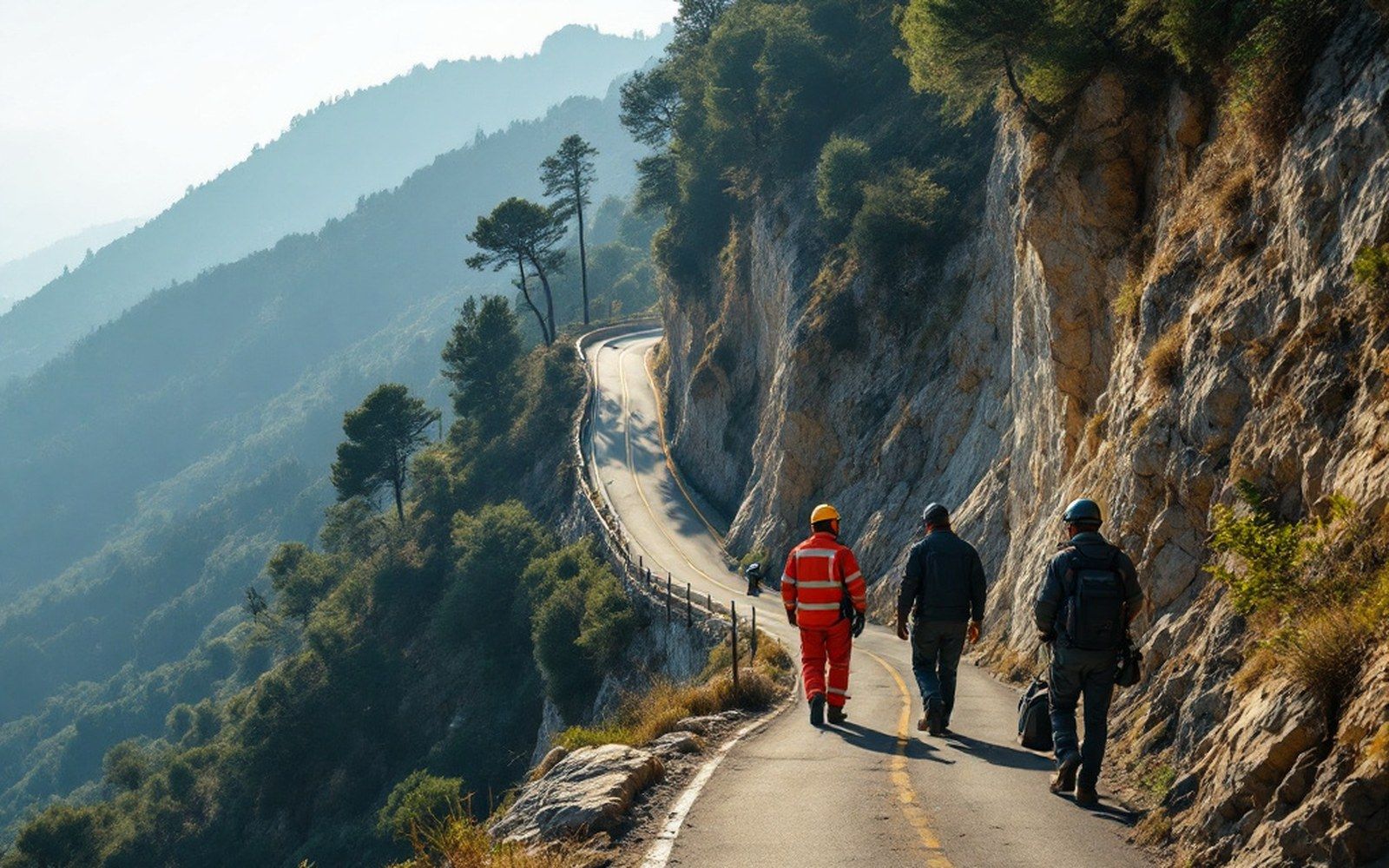
The Tour de Corse ran on 2–4 May 1986. On the first day of competition, Henri Toivonen and his co-driver Sergio Cresto, running a Lancia Delta S4, left the road on the descent of the Col de Macchione and the car caught fire. Both were killed. The stage had not been stopped. Crowd control on that and other stages was, as contemporaneous rally reporting and the subsequent regulatory record make clear, inadequate by any standard derived from the cars' actual performance envelope. The rally was not abandoned after the accident; it ran to its conclusion.
Chronology
- March 1986Rally of Portugal; fatal incidents involving spectators and a crew member
- 2–4 May 1986Tour de Corse; Henri Toivonen and Sergio Cresto killed in Lancia Delta S4
- May–June 1986FISA announces end of Group B effective end of 1986 season
- 1987WRC resumes under Group A, requiring 5,000 production examples
02The decision
FISA — the Fédération Internationale du Sport Automobile, then the sporting arm of the FIA — moved quickly. Within weeks of the Tour de Corse, the governing body announced that Group B would be discontinued at the end of the 1986 season. The formal announcement confirmed that the 1987 World Rally Championship would run to Group A regulations, requiring five thousand production examples rather than two hundred — a threshold that immediately constrained the kind of purpose-built competition car Group B had made possible.
The rally was not abandoned after the accident; it ran to its conclusion.
The regulatory logic was straightforward, even if it arrived late. Group B's production minimum of two hundred cars had been low enough that manufacturers could build vehicles with no genuine relationship to road safety standards; the evolution allowance of twenty additional cars permitted further performance escalation on top of the homologated baseline. There was no equivalence formula capping power, no energy-absorption test for the structure, no rule compelling any relationship between the car's performance and the safety facilities of the venues it competed on. The class had, in effect, written a contract that performance could fulfil but that safety regulation had never countersigned.
The events at Corsica were not the only fatal incidents of the 1986 season — there had been deaths at the Rally of Portugal in March, involving both spectators and a service crew member — but the Tour de Corse is the round at which the regulatory failure became impossible to contain. It was the last fully contested World Rally Championship event under Group B rules.

What followed was not merely a change in production minimums. The FIA began a longer process of encoding safety into the homologation system itself: rollcage specifications tied to real load cases, stage safety requirements, crowd exclusion zones with teeth. Those structures took years to mature. The decision made in the weeks after May 1986 was that a regulation which produced cars faster than its safety framework could handle had to be replaced, not reformed. Group B closed. The clause that had made it possible — two hundred cars, no power limit — was not carried forward.